
Can a country make amends for the suffering experienced during the era of National Socialism?
After the Second World War, the young Federal Republic of Germany offered victims and those persecuted by the Nazi regime so-called “Wiedergutmachungszahlungen” (reparations payments). Yet not only was the term itself problematic — the process of obtaining such compensation was often extremely difficult. This chapter of German history remains relatively unknown to this day.
Background to the Sprechende Akten Project
In its second season, launched today, the podcast Sprechende Akten (“Talking Files”) portrays, across five episodes, the fates of victims of National Socialism and their long struggle for justice. We Are Producers was responsible for the entire production.
The screenplays were based on compensation files preserved in the Staatsarchiv Ludwigsburg department of the Landesarchiv Baden-Württemberg. Drawing on these records, author Nilz Bokelberg developed scripts that shed light on the personal backgrounds of those affected, their persecution by the Nazi regime, the consequences they endured, and their long and exhausting path toward receiving reparations payments.
The Cast
As in Season 1, the concept included numerous reenacted scenes embedded within the overarching narrative framework. The narrator was Ulrike Kapfer. Key roles were cast with Cathlen Gawlich, Bernhard Schütz, Nadine Nollau, and Omid-Paul Eftekhari, among others.
The Audio Production
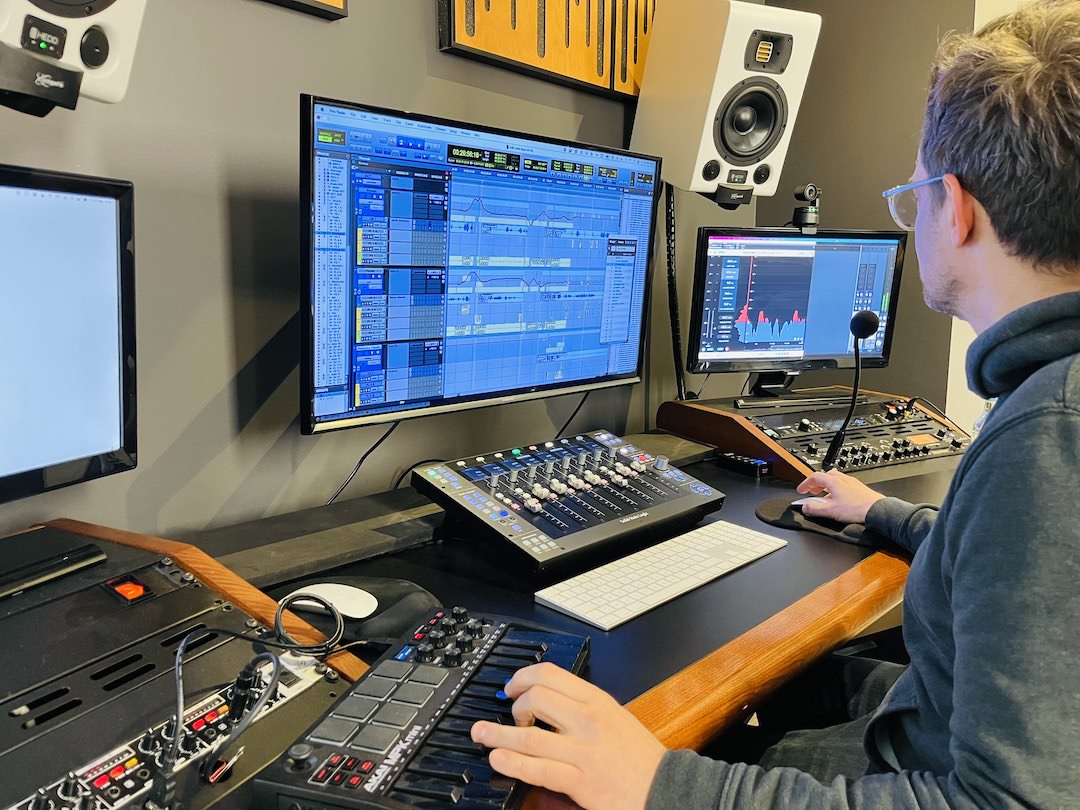
In the audio production, we interwove the different narrative layers through a distinctive sound design and musical concept.
Michael Viol, Audio Lead at We Are Producers:
“While producing some of these scenes, I found myself deeply moved and even asked myself: Should I portray this in such detailed and intense ways? On the other hand, I didn’t want to artificially soften or gloss over the suffering these people truly experienced.”
Launch on February 27, 2026
The first episode of Season 2 of Sprechende Akten will be released on February 27, 2026, on all major podcast platforms. The remaining four episodes will follow weekly.
Further information about the background of the project can be found on the website of the Landesarchiv Baden-Württemberg.